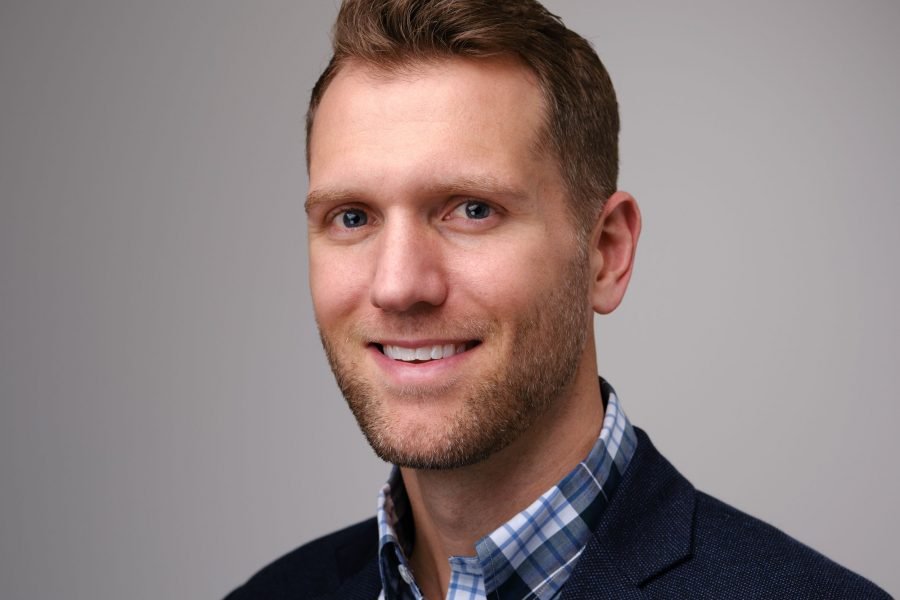
Berit “Brit” Brogaard is a writer, public speaker, and Professor at the University of Miami. She is a Danish–American philosopher specializing in the areas of cognitive neuroscience, philosophy of mind, and philosophy of language. Brogaard is the Director of the Brogaard Lab for Multisensory Research at the University of Miami. She has written over 100 peer-reviewed articles, some three hundred popular articles on neuroscience and health issues, and three books: Transient Truths (Oxford), On Romantic Love (2015), and The Superhuman Mind (2015).
Where did you grow up and what was your childhood like? Did you have any particular experiences/stories that shaped your adult life?
I grew up in Copenhagen, Denmark. Although I had some of the first electronics available to kids (the Commodore 16 and Commodore 64 computers), I spent most of my time reading as soon as I could read. Around the age of 10 or 11, I began writing short stories and flash fiction, which I collected in my desk drawer.
Back then, I wanted to become a fiction writer when I grew up. That was indeed the track I initially pursued. I eventually published a young adult novel, a children’s book, and three collections of poetry.
But I quickly realized that I probably wasn’t going to make a living from writing fiction, especially not when publishing in Danish in Denmark – a country with only about five million people. So, I went to college.
Although I didn’t end up pursuing a career as a fiction writer, my experience reading and writing from an early age has shaped my life as an adult. Writing is still my passion. When I am not fulfilling my job duties at the University of Miami, I write non-fiction books, articles, and blog posts for a general audience. I also still occasionally write poetry and fiction.
What is something you wish you would’ve realized earlier in your life?
For a long time, I had wanted to learn Spanish. Although I knew that it’s never too late to start doing something you have always wanted to do, I somehow managed to convince myself that it was too late for me to learn Spanish.
But then I moved to Miami, where Spanish is spoken at least as much as English, and I decided that I wanted to learn it. I started by looking up a few conversational words and used them to exchange a few words with people who didn’t speak English.
Eventually, I started using Duolingo and listening to Ben y Marina’s Spanish podcasts on a daily basis, especially when driving. I began with their Inspired Beginners and then I progressed to their more advanced podcasts.
Six years later, I am in no way fluent in Spanish and often stumble over words and substitute English words for Spanish words. Still, I now speak Spanish, roughly, at an intermediate level and write and read it at a more advanced level.
What are bad recommendations you hear in your profession or area of expertise?
Here are some bad recommendations I have received or heard in my profession – some in the context of my job as a professor at the University of Miami and some in the context of my work as a writer and public speaker:
“You should try to be optimistic all the time”
My thoughts: If you spend too much time trying to be optimistic (or pessimistic, for that matter), you spend too much time in the future rather than the present.
“Force yourself to work on your creative projects (e.g., the book you are writing) a little every day, even if you don’t feel like it”
My thoughts: Working on creative projects when you really don’t feel like it is a waste of time. Take the day off. Or do some routine work and reward yourself at the end.
“If you have a writer’s block, just write. Anything will do.”
My thoughts: When I have a writer’s block, it tends to be because my idea for the piece isn’t that interesting to me, or perhaps it just isn’t that interesting, period.
To get out of a writer’s block, I tend to reflect on the idea, and if I still think it may work, I brainstorm and use the results of that to create a rough outline, which I then make more and more detailed, until it’s straightforward how to proceed.
If I am just staring at the blank page, because I just can’t come up with a catchy way to start the piece, I save that step for later and dive right into the idea I have.
Tell me about one of the darker periods you’ve experienced in life. How you came out of it and what you learned from it?
Some 10+ years ago, I suddenly suffered from a lot of anxiety with no obvious cause. The anxiety eventually consumed me so completely that it made it hard for me to function on a daily basis.
By sheer coincidence, a colleague who had recently had a baby was open about her post-partum depression. Since depression in one of its many manifestations – which was the form my colleague suffered from — is related to anxiety disorders, we had very similar experiences.
Sharing experiences with her and brainstorming ways of coping really helped. But I was still suffered from a great deal of anxiety. My colleague was seeing a (talk) therapist at the time, and eventually, I decided to see the same therapist. That’s one of the best decisions I have made in my life. Even after my anxiety was mostly gone, I continued seeing her to help deal with much more mundane issues. I only stopped when I moved to Miami.
Aside from the benefits of having a therapist, the main lesson I learned from this episode is that the best people to talk to when you go through a dark period in your life are people who are currently going through the same or something similar to you.
What is one thing that you do that you feel has been the biggest contributor to your success so far?
One of the biggest contributors to where I am today has been to learn how to deal with rejections, criticism, and negative feedback.
Regardless of your field, if you want to be successful, you will get a lot of rejections, criticism, and negative feedback along the way. In my field (academia, research, writing, publish speaking), most job applications, pitches, articles, and so on, result in rejections. When they don’t, you still need to deal with criticism and negative feedback every so often.
It can be hard not to take rejections, criticism, and negative feedback personally and let them get you down. Not letting them affect me negatively is something I have been consciously working on for many years.
You need to see rejections, criticism, and negative feedback for what they are, use them to improve if you can but never let them stop you from succeeding.
What is your morning routine?
My daughter leaves for school at 7:15. So, on weekdays, I wake up at 6:40 a.m., throw on some casual clothing, and walk my dog down to our local Starbucks to get us coffees and occasionally some baked goods. After seeing my daughter off, I shower, dress, and go over my schedule and to-do list. Since I still work from home, I then get set up at home.
What habit or behavior that you have pursued for a few years has most improved your life?
Occasionally, I am just not inspired to work on creative projects (e.g., books). I used to feel that I had to make progress on those projects anyway. But some years ago, I realized that I usually just ended up wasting my time, since my progress would be extremely slow or non-existing on those days.
So, now I save some routine work for off-days. For example, if an article needs to be formatted to fit a certain style, or my website needs to be updated, that’s something I can do while watching television. So, it’s perfect for a day where I lack motivation.
If I happen to have work that I absolutely must complete on a day when I am not feeling inspired, then I plan a reward for myself at the end. For example, if I have been meaning to watch a particular movie for a while, then that might be my reward. But the reward can also be something as simple as some baked goods and a pot of hot tea.
Another habit I have implemented when I am not completely uninspired but still need some inspiration is to read or watch something that is related (sometimes only in roundabout ways) to a project I am working on. Ted talks are great for that purpose.
What are your strategies for being productive and using your time most efficiently?
Over the past few years, email had started taking up a big chunk of my time. My inability to deal with my incoming emails also started to affect me personally. I have written about it on Psychology Today.
One of my new year’s resolutions this year was to do something about this issue. I am now vigorously unsubscribing from unnecessary updates and lists and turning off notifications, as they show up.
I furthermore use Gmail’s filters aggressively, creating filters that automatically delete, mark as read, or sort emails into the categories, which I can then skim occasionally.
Finally, I have stopped using my email inbox as a to-do list. I currently use Google Calendar as a to-do list, which is not ideal either, but this approach is an improvement over leaving emails that require action unread in my inbox. These measures have reduced the time I spend on my emails, leaving more time for creative projects.
What book(s) have influenced your life the most? Why?
The Four Agreements by Miguel Ruiz
The four agreements (don’t gossip, don’t take things personally, don’t make assumptions, and do your best) still help me not to take rejections, criticism, and negative feedback personally, and the agreements are good to review before responding to others, especially if your response is going to be negative.
Girl, Stop Apologizing: A Shame-Free Plan for Embracing and Achieving Your Goals by Rachel Hollis
This is a book I now go back to regularly when I fall into the trap of not doing something, because of what our cultural norms dictate.
This book has helped me understand why it’s okay not to feel positive and optimistic all the time. It’s also a must-read if you tend to get a little too stirred up by all the mess that is going on in the world around us.
Do you have any quotes you live by or think of often?
“I’ve learned that people will forget what you said, people will forget what you did, but people will never forget how you made them feel.” – Maya Angelou
“There is only one way to avoid criticism: do nothing, say nothing, and be nothing.” – Aristotle
“You are never too old to set another goal or to dream a new dream.” – C.S. Lewis
“The most difficult thing is the decision to act, the rest is merely tenacity.” – Amelia Earhart
“The best time to plant a tree was 20 years ago. The second-best time is now.” – Chinese Proverb
“The only person you are destined to become is the person you decide to be.” – Ralph Waldo Emerson