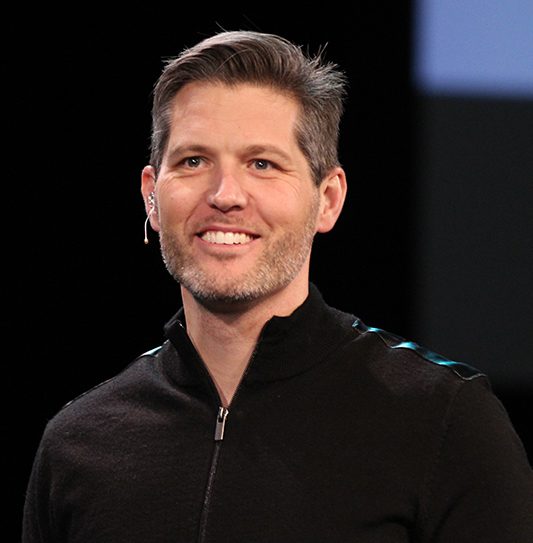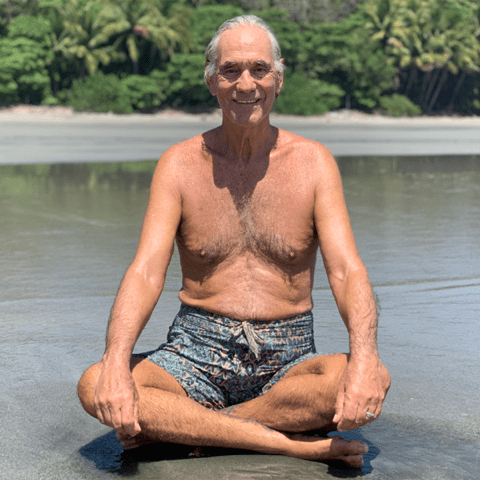
Will Johnson is a teacher of sitting meditation. Although not formally affiliated with any particular Buddhist lineage or school, he has been invited extensively into the Buddhist world to share his unique deeply body-oriented approach to sitting meditation practices. Johnson is the author of fifteen books including The Posture of Meditation, Breathing Through the Whole Body, and The Spiritual Practices of Rumi.
Where did you grow up and what was your childhood like? Did you have any experiences/stories that shaped your adult life?
I grew up in a middle-class Jewish family outside of Minneapolis, Minnesota. I was blessed to have a mother and father who loved each other and equally loved my older brother Tod and me. My earliest memory is sitting on the linoleum floor in front of the kitchen refrigerator (known in those days as the “icebox”) with a puzzle with four different heads and bodies that went together with no matter which head you attached to which body. Pretty much my entire childhood life revolved around fishing and playing the guitar.
As a child, I was drawn to the beauty and elegant motions of fly fishing and the music that I play to this day was seeded then. I was hopeless at athletics (to all of my current students who think I must have been a body awakened person from birth, I let them know that that just wasn’t so and that perhaps I’ve been so strong about insisting on bodily awakening because I needed it so much myself) and excelled in book learning. In today’s parlance, I would probably be referred to as an
“artsy nerd.”
But one childhood experience stands out above anything. From the age of about six or seven up to around ten or eleven, I would find myself, about three times a week, going to bed at night when it would start to happen. My physical body would start feeling exceedingly vibratory and soft, and I would start dropping through the mattress, through the floor, right into and through the earth while simultaneously expanding outward. At the height of the experience, I would feel, as best as I could enunciate it, that I was dissolving into the universe. In many ways, my entire life has been about pursuing and exploring this dimension that was revealed to me at such a young age.
When in later years I came across the phrase the gods are in the valley, I flashed back immediately to these nighttime excursions. I would often say that I would try, the next time it happened, to get very clear about what was occurring so I could talk to my mother about it, but every time it happened it took me to a place that was beyond words, and I couldn’t say a thing. The closest I ever came as a description was a visual image of sitting on a high rocky escarpment looking out over a vast desert valley. The silence formed a felt field that expanded me far out beyond myself, and I knew when as a young adult I read The Secret of the Golden Flower that the valley that was alluded to in that book and the valley of my nighttime dissolvings were the same place. I’ve gone on to write about those nighttime experiences, as best I could, in The Sailfish and the Sacred Mountain.
During the first profound meditation experience I ever had, I suddenly was transported back to that valley, and I just wept and wept at both remembering that wonderful place from my childhood and re-experiencing it again. Looking back, I’m grateful that I was never able to put words to what was happening and talk to my parents about it. Chances are that I would have been taken to see a doctor who might have put me on medications designed to dull those excursions.
What is something you wish you’d realized earlier in your life?
That growth proceeds through accepting and relaxing into felt reality as it is instead of thinking I needed to heroically change or manipulate it. That, even though we spend so much time identified with the speaker of the unbidden thoughts in our minds, whom we all call “I,” what I am is so much more and beyond, and furthermore, it’s been here all the time.
Hence, the spiritual path is not one of creating something that’s not there but of softening the rigid impediments that keep the magic of what’s always been here at my core unavailable to me.
What are bad recommendations you hear in your profession or area of expertise?
That you need to grow and evolve beyond yourself. You don’t have to grow and evolve beyond yourself. You just have to accept what you are in this moment exactly as it appears and relax and let go. That you need to sit completely still as you meditate.
On the contrary, you need to relax so that, when you breathe, the force of breath creates transmitted motion through every joint in the body. The most radical piece I bring to the Buddhist conversation is that, for relaxation to continue over time, continuous, subtle (and sometimes not so subtle), amoeba-like motions have to be allowed to occur throughout the entire body in resilient response to the force of breath that wants to make its transmitted way through the entire body not unlike how a wave moves through a body of water.
Tell me about one of the darker periods you’ve experienced in life. How you came out of it and what you learned from it.
The dark periods of my life have always been sprung through an unwanted breakup to a love affair. So much of my spiritual focus has been on joining energies together, and so the splitting apart of what felt like union could be devastating to me. The silver lining is that every subsequent relationship went further until I made it through to meet the woman who shares my understanding and values so deeply that she became my wife.
What I’m about to say I do very reluctantly as heartbreak is just rotten and I don’t want to glamorize it in any way, but through my study of the Sufi mystic Rumi (who experienced a devastating heartbreak when his great friend Shams, whom he viewed as the source of his awakening, just up and left one day) I’ve come to accept that, if you open yourself to the path of love, then there are only two events powerful enough to shatter the protective casing that ordinarily surrounds the heart and keeps its life-giving energies contained. The first is to fall in love, to meet someone whose existence so thrills you that you get torn open by feelings and joys that you never knew before. The second is to have your heartbroken, to lose the love that was sustenance to your soul, and to be left behind, discarded, desolate, and devastated. On the path of love, both are apparently necessary.
Both happened to Rumi. Both have happened to me. Haven’t they happened to you?
What is the one thing that you do that you feel has been the biggest contributor to your success so far?
I finish things. Whatever it is—from cleaning the house to writing a book—I will not lose focus, slough off, or move onto something completely different until I’ve finished whatever I’m doing to my satisfaction.
What is your morning routine?
I live on an idyllic property in Costa Rica, surrounded by Big Nature, and looking out over an expansive view of the ocean and sky. One of the things this means is that there are virtually no manmade sounds or anything even remotely resembling city lights and bustle. Couple this with the fact that we don’t have a television, and so our sleeping cycles have become very different from when we lived in North America. When it gets dark, we go to bed, and this can sometimes be as early as 7:30 at night. I’ll not uncommonly wake up between 3 and 4 in the morning, and this is a time I’ve come to love. Everything’s soooo quiet and peaceful.
I take a bit of time to wake up fully, sometimes will have a green, lightly caffeinated tea with my wife, but then it’s time to get on with our day which generally means get on with our practices. I need a shower to wake up the way some people need coffee. After cleaning up, it’s time to sit. Lately, I’ve been doing my sitting meditation practices in front of a mirror as locking into the gaze helps shift me from my mind into feeling presence very rapidly.
For many months now I do a practice that I call Hollow Bamboo Breathing that consists of four sections each fifteen minutes long. During the first section, Summoning the Helpers, I explore the basic sitting principles of what I teach as Hollow Bamboo Dharma: the establishment of the upright spine, profound relaxation through the body, allowing subtle, constant, amoeba-like motions to occur throughout my entire body in resilient response to the force of breath, inviting what I call the shimmer back to felt life.
During the second section, The Breath off Awakening—I start breathing through the nose and/or mouth fast and forcibly, making sure that I keep the entire body in motion. Sometimes that motion is like an undulating wave through the spine and torso, but other times it can become almost like a dervish dance.
During the third section, Surrendering to Current, I just let go and allow breath and the strong sensations that the second section has kindled to sweep through me. During the fourth section, Dissolving, I lie down on my back and . . . dissolve away. After sitting practice, I will often want to do something strongly physical: swimming laps, yoga, Five Tibetan Rites, working out on a Pilates Reformer.
These practices are my daily medication and supplementation. If I miss a few days in a row, I don’t get wonky, but I can’t pretend that I don’t feel the compression coming back in.
What habit or behaviour that you have pursued for a few years has most improved your life?
Without question, the daily practices of awakening the shimmer and liberating breath from its imprisonment in dense, unmoving flesh have opened me to a life that allows me to glide through at least some of the day in a condition of palpable flow at the levels of both body and mind. The quality of consciousness that passes as normal in the world at large is a consciousness that is lost in thought and out of touch with the feeling presence of the body. Through awakening the minute pin-prick blips and wavelets of sensation throughout the body, it’s as though someone just pulls a plug on the parade of unbidden and random thought and the domineering entity “I” who is the speaker of all those thoughts. So my meditation practices are all entirely oriented toward this awakening, this inviting of sensations back to felt life. Leaving unbidden thought behind and welcoming presence back from its exile in the land of the unfelt improves my quality of life beyond anything else I know. Making sure the love bond with my wife stays high and strong also is a mandatory joy.
What are your strategies for being productive and using your time most efficiently?
I like to be boringly routine when I’m working on a project and foolishly spontaneous when I’m not. I’m someone who works well with pre-determined deadlines.
When I write a book, for example, I pretty much start every day with meditation and movement practices and then get to my desk for two or three hours, and I virtually never waiver from this throughout the entire week. My play and music time is afternoon and evening so mornings are for projects, afternoons are for letting go 🙂
What books have influenced your life the most? Why?
The first spiritual book I ever read was The Secret of the Golden Flower, an old Chinese text that spoke of an evolved condition of consciousness that, while hidden from conventional view, is nonetheless accessible to anyone who enters upon the path that seeks to uncover the secret. I just resonated deeply with what I was reading, almost feeling as though the ancient writer knew who I was and was speaking to me directly. One phrase in particular—the gods are in the valley—released a memory from my childhood in which I would attempt to describe what was happening to me with almost identical words. I speak more about this experience in Question 1.
The first time I read The Dhammapada, the translated aphorisms and sayings of the historical Buddha, it made such complete sense to me. The first time I heard the Second Noble Truth of the Buddha—that we suffer because we want things to be different from how they are—I felt I’d just been shown the sanest psychological model I’d ever come across.
The I Ching, the Book of Changes, gave me the intellectual understanding that the only constant in life is change, change, change.
My interest in sitting meditation practices has always been to directly experience this constant current of change as the fundamental felt reality of my body. When that happens, any sense that the exclusively egoic perspective is the only game in town goes right out the window, revealing the secret in its place.
Do you have any quotes you live by or think of often?
My path of meditative practices proceeds by waking up what I call the felt shimmer of the physical body, the web of buzzing, vibratory presence composed of minute pinprick blips of sensation that’s ordinarily suppressed by being so lost in thought. To reveal the shimmer, you have to soften and relax the rigid tensions in the tissues of the body. When you do that, huge energy gets awakened that feels like a force of healing so long as you can keep relaxing the rigidities.
Probably my all-time favourite quote is: “Fortunate are the people who have learned how to soften the rigidities within for they gain access to the universal healing power of nature.” What makes this quote even all the more remarkable is that it is a closer, more literal translation from the Aramaic that the historical Jesus would have spoken than is its far more commonly accepted translation (which itself is a translation of a translation of a translation . . . you get the idea): Blessed are the meek, for they shall inherit the earth.
In my younger attempts to resolve why I felt so conflicted about organized religions the following statement from the Swiss psychoanalyst Carl Jung set off light bulbs flashing in my brain, and I suddenly understood that I wasn’t going to find what I was longing for in the formal houses of worship: Organized religion is a defense against having the religious experience.
I was fortunate to know and study with the somatics teacher Ida Rolf. She would say that a body that is truly integrated and balanced could relax in a way that would stimulate evolutionary energies which would then rise up through the body resulting in an evolutionary transformation of consciousness. This is essentially what I teach in the world of sitting meditation.
Speaking of which, the Buddha’s altogether remarkable culminating statement about breath continues to guide me in my personal healing and spiritual practice: As you breathe in, breathe in through the whole body. As you breathe out, breathe out through the
whole body.
Saying much the same thing, but far more lyrically, is the Sufi mystic Rumi’s instructions on breath: bringing breath to life is the essence of every religion and the cure for every illness let every breath you take cleanse the soul of its grief and pain so it can continue to burn brightly inside you.