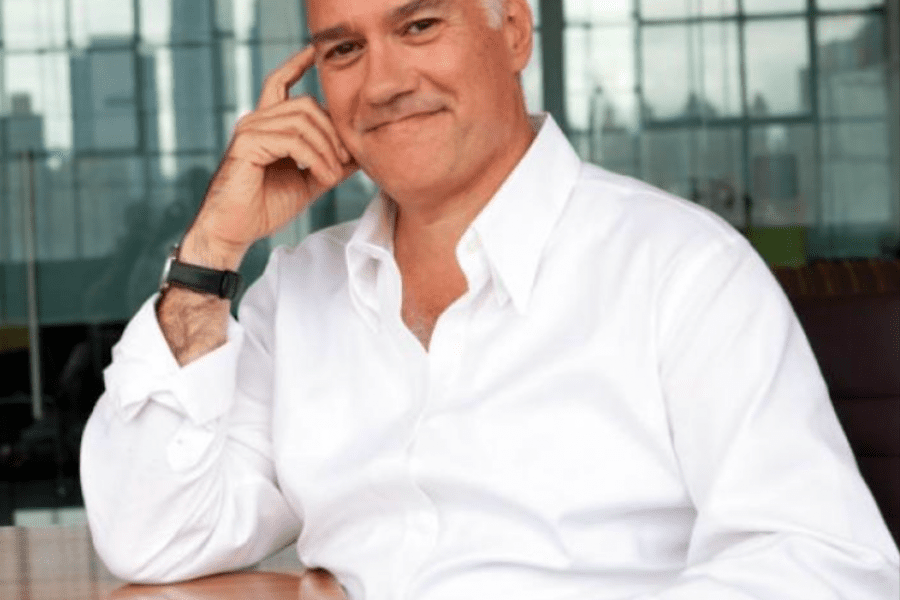
Ian Sanders is a creative consultant, storyteller, coach, and author on a mission to energise people about their work lives. Through his workshops, presentations, storytelling, and one-to-one walking coaching sessions Ian brings a fresh and passionate approach to spark change and inspire leaders, organisations, teams, and individuals. Ian is the author of five books. His next book, “365 Ways To Have a Good Day”, is due out at the end of the year.
Where did you grow up and what was your childhood like? Did you have any particular experiences/stories that shaped your adult life?
I grew up by the coast in Leigh-on-Sea, a small town 40 miles east of London. For the first ten years of my life, we didn’t have a TV set in the house. Curiosity about TV – as well as my love of radio – fuelled an interest to work in the creative industries. My school headmaster told me to forget my dream and do something else. But I ignored him and got my lucky break when BBC radio came to my town and I got some work producing and presenting while I was still a teenager. I went on to work in music television and the radio industry. It was an important lesson: to believe in yourself and never give up on your dreams, no matter what the naysayers tell you.
What is something you wish you would’ve realized earlier in your life?
That happiness and fulfillment comes from sticking to who you really are rather than trying to be someone you’re not. At the start of my career, I thought that to be successful I needed to wear a smart jacket, become a boss and earn lots of money. I soon realised that there is another way! And I learned that success for me is about sticking to who I really am and carving out a work-life around that.
What are unhelpful recommendations you hear in your profession or area of expertise?
Success is all about status and $$$.
Tell me about one of the darker periods you’ve experienced in life. How you came out of it and what you learned from it?
By the end of the 1990s, I had made it. I was managing director of a radio studio business, had a team of great people working for me, and was earning good money. But that was all on the surface. The more success I had, the more it took me away from what I loved. I was spending too much time with spreadsheets and business plans and I’d lost my creative soul. Soon the pressure was making me ill. I was diagnosed with depression. I decided to quit my job and go it alone, to start my own business as a solo entrepreneur. What did I learn? As my friend Jerry (the author of ‘Reboot’) says when there’s a disconnect between your inner self and your outer self that can be problematic. And life got better when I was in alignment: one self not two selves being pulled in opposite directions!
What is one thing that you do that you feel has been the biggest contributor to your success so far?
A while ago I decided that the best way for me to thrive, do great work, and be happy in the process was this: to know what matters most in my life and live my life true to that. That’s my ‘system.’ As I’ve progressed through my career, I’ve become more and more aware of making choices that enhance my well-being and sense of fulfillment. For me, my system is my North Star – keeping me aligned with who I really am and what makes me tick.
What is your morning routine?
The alarm goes off just before 6 am. My wife gets up first; sometimes I take a bit longer! There are three morning rituals that I’m very intentional about. One. Starting the day walking the dog on the beach. Two. Picking up takeout coffee. Three. Once at my desk, listening to a favourite piece of music to get me going. Those are the ingredients I need to get the day off to a good start.
What habit or behavior that you have pursued for a few years has most improved your life?
One habit that’s made a big difference to the quality of my life is writing my weekly Good Times list. I started it in 2013 and haven’t stopped since. Each week I write down all the positive experiences in one weekly list: those moments and experiences in life that bring joy or energise me. It’s radically changed how I look at – and live – my life.
What are your strategies for being productive and using your time most efficiently?
Well, the first is making sure the projects I work on, the relationships I forge, and the professional choices I make are fully aligned with the real me: that always gives me rocket fuel. Additionally, it’s making sure I pay attention to all the ingredients I need to have a good day, what I need to stay creatively energised, productive and happy in my work. For example: working with decent people where there is shared chemistry; getting away from my desk whenever I can for swims, dog walks, and seafront runs; listening to music; having fun; going on journeys. It’s not about optimising every waking minute of the day, it’s being in a good mindset so I can do the work that really matters.
What book(s) have influenced your life the most? Why?
I can’t think of any single book that’s influenced my life, but as I read a lot, there have been many that have provided inspiration over the years. Some of my favourites on my shelf right now include: ‘The Project 50,’ part of a wonderful series of pocketbooks by Tom Peters; ‘Hell Yeah or No,’ by Derek Sivers; ‘Reboot! Leadership & The Art of Growing Up’ by Jerry Colonna; ‘Rebel Talent’ by Francesca Gino.
Do you have any quotes you live by or think of often?
Yes, one of my own: “This is my LIFE, not a business model!”. I’ve been running my own business for the last twenty-one years. But I’m not trying to commoditize every waking hour. My work isn’t about trying to make the most money I can, but about living in a way that gives me all I need in every aspect of my life. That philosophy informs the choices I make on a daily basis.