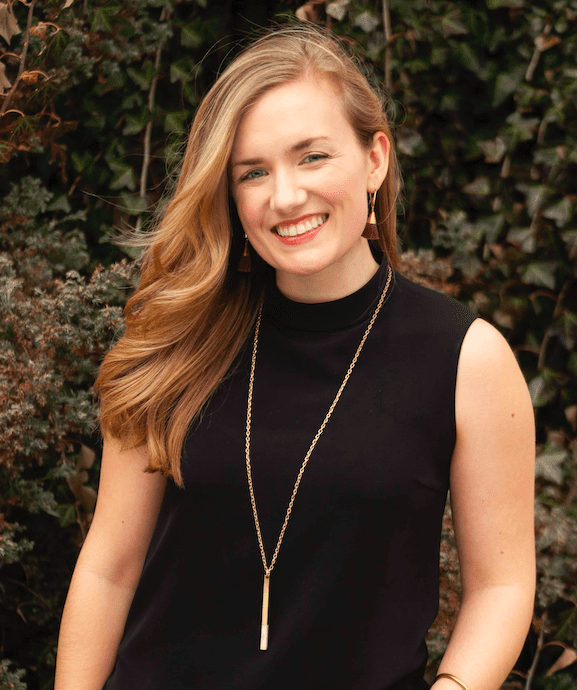
Erin Houston is the Co-Founder & CEO of wearwell, an apparel and fashion company that offers ethically and sustainably made clothing. They offer a one-of-a-kind membership service through which you can easily discover and buy clothing that pays garment workers fairly and uses environmentally sustainable materials. Houston is an entrepreneur in the conscious fashion movement and deeply engaged in global development and social enterprise.
Where did you grow up and what was your childhood like? Did you have any particular experiences/stories that shaped your adult life?
I grew up in Delaware and was fortunate enough to go to an all-girls’ school. This experience shaped my perspective to believe that I could do anything I set my mind to as well as to understand the ways that privilege shapes access. From an early age, I was thinking about the ways in which I could focus my life on empowering others and specifically empowering women to be afforded equal opportunities. While it’s been a winding road, the reason why I work on ethical and sustainable fashion today is that over 80% of the world’s 17+ million garment workers are women, many of them in developing communities. Imagine what the world would look like if every single one of those women were paid fair wages and if environmental impact – such a toxic dyes and pollution – didn’t harm their communities as much as it does today.
What is something you wish you would’ve realized earlier in your life?
I wish I would have realized that it’s smart to ignore some people. As a female founder, you have the opportunity to surround yourself with amazing communities who lift you up, support you, and cheer you on. You also face nay-sayers time and again and people who simply will never believe in you because you don’t look the part. I wish I knew sooner to just let those people be and move on to those who welcome you in.
What are bad recommendations you hear in your profession or area of expertise?
I do a lot of investor pitching and hear feedback all the time on how to improve, what to change, what’s working, and what’s not. Plenty of it is good advice and plenty of it is terrible. Simply don’t listen to everyone. Instead, trust your gut. Think about the source, their motive, and whether or not you should actually take their feedback to heart before you let it sink in and direct you in one way versus another.
Tell me about one of the darker periods you’ve experienced in life. How you came out of it and what you learned from it?
I struggle with high, chronic anxiety and, despite it being a lifelong challenge, I only acknowledged this a couple of years ago. I came out of it only after breaking down, acknowledging the issue, and finding ways to manage, including therapy, mindfulness practices, and the power of daily routines. I learned two great lessons in that period of my life (and I will always be continuing to learn more): you don’t have to hide your pain and facing your fears is the most effective way of getting out of your own way.
What is one thing that you do that you feel has been the biggest contributor to your success so far?
If you don’t have one yet, go get yourself a co-founder. In addition to the love and support from my family, my co-founder Emily is without a doubt the biggest contributor to what I’ll re-phrase from the question as our success. Our teamwork is what has built wearwell and we’ve worked hard to forge a relationship that is solid. When a roadblock comes our way, we simply don’t give up and our resilience comes from the foundation we’ve created with one another.
What is your morning routine?
My routine is essential to my life. I wake up at or before 6:30 am every morning, care for my dog, and then roll out my yoga mat. Yoga is followed by a short practice of gratitude and intention setting for the day – not on what I’ll do, but how I’ll show up in the world. Next up, a green smoothie, cup of coffee, and a 20 minute walk outside before sitting down with my laptop.
What habit or behavior that you have pursued for a few years has most improved your life?
Yoga! It’s one of the few activities where I can completely turn my brain off. I’m not in charge and I simply just have to listen and follow the teacher. It renews my mind as much as an 8-hour night of sleep.
What are your strategies for being productive and using your time most efficiently?
The action priority matrix helps me rank goal-related tasks by whether they are low or high impact and whether they are low or high effort. The tasks that are low effort, high impact are the no-brainers for achieving high productivity and then you move on to the high effort, high impact next, and deprioritize the rest.
What book(s) have influenced your life the most? Why?
I’m a big reader of novels. They tap into the creative, imaginative, and storytelling part of my brain. Some of the most influential – Beloved by Toni Morrison, The Poisonwood Bible by Barbara Kingsolver, and Les Guerrilleres by Monique Wittig – are all feminist literature, so it’s no surprise I’ve chosen to work on issues that are so important for women’s rights.
Do you have any quotes you live by or think of often?
It definitely sounds trite, but I repeat the mantra “Be here now” often in my head. In a world that’s moving at a ridiculously fast pace even through a pandemic, the most important social justice movement of our lifetime, and an economic crisis, it’s really easy to have chatter constantly running through your head. Focusing on the present allows me to concentrate on what’s most important rather than thinking about the headline I read that morning, my never-ending to-do list, or what I’ll eat for dinner 5 hours from now.