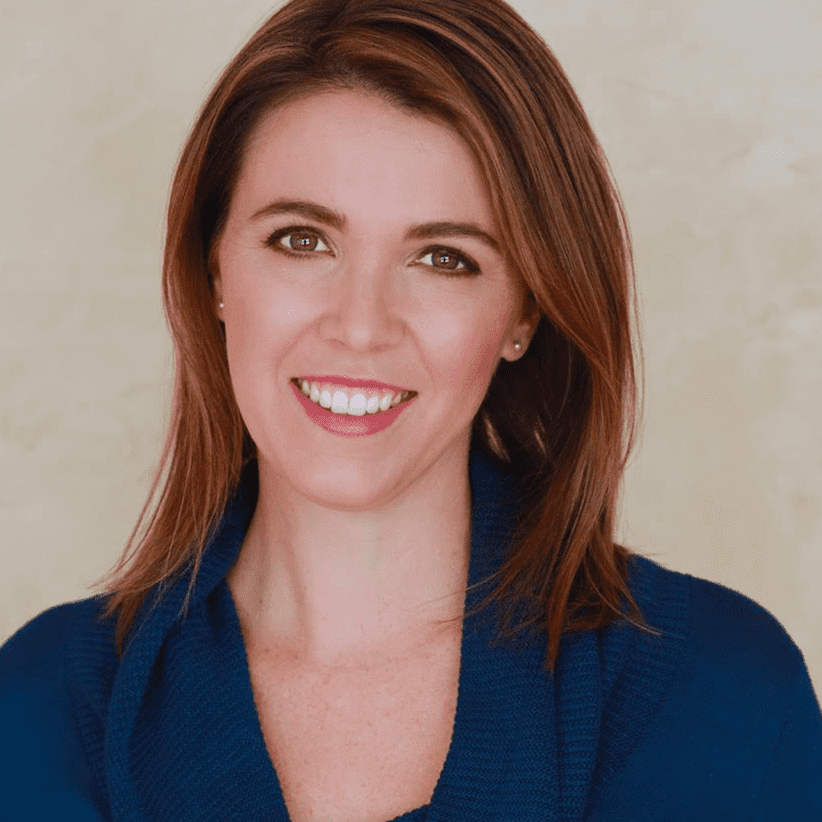
Jennifer Briney is the On-Air Host and Executive Producer of Congressional Dish, a twice-monthly podcast exposing the secrets buried beneath the partisan noise in the United States Congress. She launched this program in order to share the information, to have an emotional outlet for dealing with the discoveries, and to create a community of people who were interested in Congress’s effect on our lives.
Where did you grow up and what was your childhood like? Did you have any particular experiences/stories that shaped your adult life?
I was born in Denver, Colorado but was raised from the time I was six years old in Irvine, California. My mom still lives there. Our village in Irvine is a planned community, where everything we needed in life was within three square miles surrounded by fields of orange trees. It was an amazing, privileged childhood. As I got older though, every single one of those orange fields got mowed down to make Irvine into a massive hub of corporate headquarters and corporate apartment buildings. Small businesses disappeared and were replaced by corporate chains.
Irvine is clean and safe and painfully dull, at least in my opinion. The corporatization of my hometown transformed it into a place that is almost unrecognizable to me and I think it’s one of the foundational experiences that formed me to be suspicious of corporate power, especially as I watch the same forces that changed my hometown doing the same thing to towns all over the country and the world.
What is something you wish you would’ve realized earlier in your life?
The importance of sleep! Before I surrendered to the reality that I am unemployable and created my own business, I was waking up to an early alarm, slamming caffeine to get through the day, and was struggling with my weight. As soon as I decided that I would do whatever I had to do to structure my life so that I could almost never wake up to an alarm, everything got better. I don’t use caffeine at all anymore and I’ve maintained a healthy weight (with the help of Weight Watchers) for fourteen years and counting. But it’s all because I get a good night’s sleep every night, as many hours as my body needs. I think I would have been healthier in body and soul had I learned that at a younger age. Better late than never though, right?
What are bad recommendations you hear in your profession or area of expertise?
Podcasting is a relatively new industry and it breaks my heart to see how many podcasters are laser-focused on how to attract and please advertisers and think that an advertising-based business model is the only way to make a living in this business. It’s not their fault. That is common wisdom preached by many in the industry.
My own experience, however, in funding Congressional Dish using a Value for Value funding model (invented by Adam Curry and John C. Dvorak), has proven that it’s possible and lucrative to create a podcast – even one covering controversial topics – with the listener as the customer as opposed to corporate advertisers. My funding model has provided me with precious editorial freedom, a much deeper connection to my audience, and ironically far more money than other podcasters who are beholden to advertisers are making with similar audience sizes.
Tell me about one of the darker periods you’ve experienced in life. How you came out of it and what you learned from it?
I almost quit my show in 2017. After Donald Trump was elected and inaugurated as the President of the United States, let’s just say that emotions were running high. As the host of a podcast about government, a lot of anger from strangers was aimed in my direction. It was a lot in volume and in vitriol, and I struggled with how to handle it as a non-celebrity with no celebrity friends to talk to and lean on for support.
I dealt with it by putting some systems in place to erect some boundaries between myself and the public. My sister now has access to my emails and deletes hateful messages that I don’t need to see. I also have stopped responding to most comments and messages, which felt rude but now I understand is necessary to maintain my sanity and to get my own work done. I also take time off now, which I hadn’t done for the first five years of building the show.
Looking back, I’m so proud of myself for simply continuing to produce episodes when I really didn’t want to. I didn’t do my best work in that time period, but the show still exists and what I learned is to just keep going. I had faith that things would eventually mellow out and get better, and they definitely have.
What is one thing that you do that you feel has been the biggest contributor to your success so far?
The support of my husband. When I started the podcast in 2012, most people still didn’t know what a podcast was and almost no one was making a full-time living doing it. Despite that reality, I had an idea that my husband agreed had potential and he agreed to finance our life while I gave it a try. I don’t think I could have done this without his support – financial and moral.
What is your morning routine?
I never, ever get out of bed before 8:30 am unless I have a plane to catch. I wake up when my body is ready. The first thing I do is eat breakfast. I never skip it. After I eat, I check my to-do list and start checking off my tasks.
What habit or behavior that you have pursued for a few years has most improved your life?
After my brother-in-law – who was a runner that I adored – suddenly died in 2016, I started running. I felt closer to him when running for some reason. In 2018, when my husband and a group of our friends signed up to run a half marathon, I decided to join them. I hated training at first but eventually I experienced that sensation that runners always talk about but that I thought was a lie; that feeling when nothing hurts, breathing is easy, and I experienced clarity in my thoughts. I was finding that I was getting inspiration, and answers while out for my runs, and afterward, my anxiety was more manageable and I was sleeping better. Regularly running has helped me be healthier mentally and physically, especially during the pandemic.
What are your strategies for being productive and using your time most efficiently?
To-do lists are essential in my life. I use an app called Todoist and it tells me what I have to do the minute I wake up, which gives my days structure. It also allows me – as someone who works from home – to have a healthy work-life balance because there does come a point when I’m done for the day. I also get so much satisfaction from checking off the boxes and seeing nothing left on the list.
What book(s) have influenced your life the most? Why?
The Shock Doctrine by Naomi Klein changed my life. I was just barely an adult when the George W. Bush administration overthrew and tried to remake the government of Iraq and I was obsessively trying to understand the real reasons they did it since the weapons of mass destruction reason was clearly a lie.
The Shock Doctrine put the pieces of the puzzle together in a way that let me see the big picture for the first time. It explained to me that the two parties that have controlled the United States government during my lifetime are united in pursuit of furthering an economic system based on privatization and securing resources for multinational corporations.
This theory, which my years of research have affirmed time and time again, explained not only Iraq but our interference in governments around the world going back to at least the end of World War II.
Do you have any quotes you live by or think of often?
My dad, to this day, says something that for a long time I found super annoying: “Focus on the donut, not the donut hole.”
For a long time, I saw this as a way of minimizing my complaints but I see it differently now. He was trying to teach us to focus on what we have instead of the smaller things that are missing. I’ve found myself, especially during the COVID pandemic, thinking of that when I feel a depression wave closing in.
It’s easy to focus on all the events that we had to miss in 2020 and 2021 but there were also so many blessings that have come out of this, such as getting to spend a lot of time with family, taking up hiking as a new healthy hobby, and being forced to get some much-needed rest. By focusing on the things we have, especially the unexpected good things, navigating tough times is not nearly as hard.