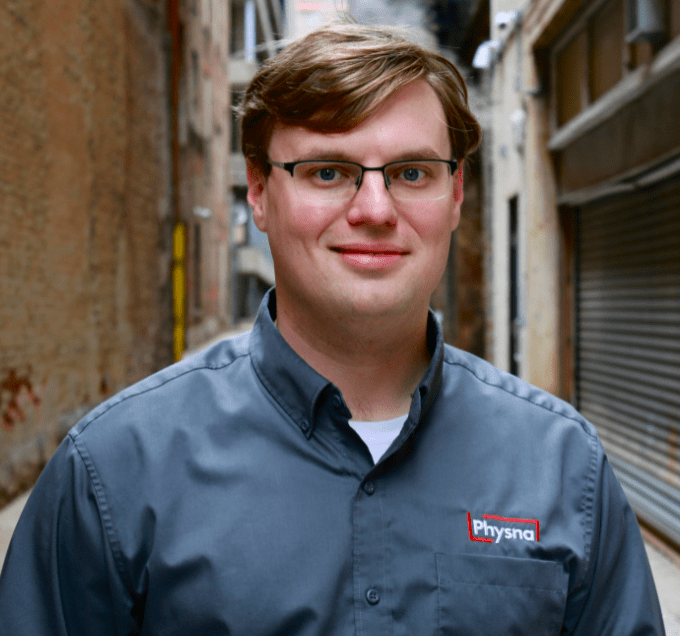
Paul Powers is an accomplished serial entrepreneur who founded multiple successful tech-focused enterprises. He is the Founder and CEO of Physna, a company that leverages the power of 3D data.
Where did you grow up and what was your childhood like? Did you have any particular experiences/stories that shaped your adult life?
I grew up in Cincinnati, Ohio. I was homeschooled after experiencing regular violence at the poorly run local public school in first grade, as private school was economically out of the question for my family. Not long after, my father was severely injured in an accident and my mother had to return to work. As a result, I was mostly self-taught from a very young age. This was transformative in every way. It allowed me to think bigger-picture since I lacked the distraction of peers. I learned to be independent and most importantly, I learned that I could learn anything I truly wanted to. Years later, I was able to attend college early, and I had the self-confidence needed to move to Europe, learn the language and pass the German bar exam ahead of schedule – all while running a company to pay for the costs. There was no system in place to make this happen. I had to figure it out. I had to learn the language and figure out how to make enough money to survive along the way. Had I grown up with a rigid structure and focused on how I measured up to my peers, I doubt I would have trusted myself to take on those risks and do something unique for which no program was in place.
What is something you wish you would’ve realized earlier in your life?
My success is no more than the sum of what I’ve learned through my failures. There are lessons that can be learned from a book, but the key lessons to success are nuanced and instinctual – they simply have to be experienced. I can honestly say there is only one kind of failure I regret, and that is the failure to learn from failures. The one lesson I wish I had learned earlier was the importance of learning from every experience – good or bad. It is tempting to attribute outcomes to outside influences rather than looking at what one could have done differently. This is especially true when things do not work out as planned. The faster you learn from your mistakes, the faster you grow, and the more you can scale your success.
What are bad recommendations you hear in your profession or area of expertise?
Most bad advice tends to include superlatives. It is important to reset one’s perspective, and it is easy to do so through simple expressions that include words such as “always”, “never”, “best”, “worst”, etc. In my experience, those expressions tend to be inaccurate. More importantly, they are limiting. If you want to change the world – whether in a big way or a small way – it is unlikely you will get there by following the status quo. I personally find one of the greatest ironies in startup culture to be that a great number of people believe that if you wish to achieve something by thinking outside the box, there is only one set way to do so. Tradition and trends are set by leaders and followed by followers. It is important to know and understand tradition and trends, but to be bound by them is to be limited to a set range of possibilities.
Tell me about one of the darker periods you’ve experienced in life. How you came out of it and what you learned from it?
Everyone experiences tough times at some point. For me, dark periods were often ones of doubt or loss. The very worst periods involved both. Moments of doubt are common, and I would be lying if I said I never experience them today. But there is a way to overcome doubt, and the more you do, the less doubt you will experience. Loss is different. You can’t get over or around loss; you can only get through it. The most recent experience I had where both were intense was in late 2019, when my co-founder – Glenn Warner, our CTO – suddenly passed away. I had lost a close friend, and without a strong backup to fill his place at the time, I experienced frequent and intense periods of doubt and fear. While I never doubted we would get through it and eventually do well, the short-term and mid-term prospects were suddenly highly opaque. I came out of it through sheer determination and hard work, and it was one of the most powerful learning experiences of my life. At a personal level, I learned that I am stronger than I had ever believed and that I can lead effectively and with conviction in times of great personal trouble. The company is more successful now than ever and has grown many times over in the 18 months since.
What is one thing that you do that you feel has been the biggest contributor to your success so far?
Throughout my life, I have always had a clear goal. The ability to think about my life and goals big-picture while homeschooled gave me clarity from a very young age. I believe virtually every meaningful success in my life can be traced back to one simple practice: How to think. We are trained to think chronologically – where do I want to be today, tomorrow, next week, next year, etc. That way of thinking is a great plan to nowhere. If you were blindfolded, would you rather follow another blindfolded person who is carrying a cane, or someone who can see? Leading implies there is a destination. A leader is therefore one who helps followers reach a destination. If you don’t know where you’re going as a leader, then everyone is lost and you are on a path to anywhere, which might as well be a path to nowhere.
Many people have a goal in mind, but that goal is so vague that it fails to make navigation any easier, and it fails to inspire others along for the journey. Saying “I want to make more money.” is like saying “My goal is East.” I find it ironic that most people have more foresight and discipline when it comes to setting trivial goals than they do for their life overall. If you plan to go to the store to buy something, you have a clear goal in mind: You know where you’re going, you know why you’re going there, and you know what you want to achieve when you arrive. If you encounter a detour or a red light, you will still drive to the store. This logic seems to disappear when it comes to the big picture for most people. They instead choose which street they want to drive down, then which turn to make based on whether the light is red, and are completely lost at a North/South intersection because their destination is simply “East”.
I strongly believe that it is important to start with a crystal-clear goal in mind and then to plan backward. To achieve X in 10 years, where do you need to be in 9 years? 8 years? 7? What about at the end of this year? This quarter? This month? This week? Today? In the next 30 minutes? This process creates immense clarity and conviction – and when you pair that with ambition and set a goal that truly excites you, others will follow that dream.
What is your morning routine?
I wake up at 6 am on most days, though I will wake up at 7 am if I was up very late the night before. I drink coffee, shower, brush my teeth, and immediately start working. Usually, I am working via my phone well before I even finish that routine. I wear virtually the exact same outfit (not the same clothes, but virtually identical clothes) every single day – including most weekends. The fewer decisions you have to make on trivial matters such as what outfit to wear, the more cognitive capital you have to do what actually matters.
What habit or behavior that you have pursued for a few years has most improved your life?
Scheduling virtually everything – down to when I will think about what – is a crucial tool that I use every single day. It may sound paradoxical, but this is extremely liberating. When you run a company, many things are constantly competing for your attention. To grow and scale, it is vital to determine what actually matters and to keep the macro view in mind even while working on smaller-scale matters. This is only possible through an abundance of time management.
Other important habits and behaviors include constantly learning and improving through reading, seeking advice, and researching, as well as maintaining self-awareness with questions such as “What am I thinking/feeling and why?”, “What could I do better?”, etc. Through this, I’ve learned to schedule with more efficacy, e.g. to schedule the most important activities for certain times of day when I know I’ll have the most energy and creativity.
What are your strategies for being productive and using your time most efficiently?
In addition to scheduling virtually everything I do, I make it a point to regularly review whether I’m focusing on the right things for the right amount of time. Once a month, I audit my calendar to see what received too much attention, what didn’t receive enough, and what received the attention that should have been delegated – or perhaps ignored entirely. Most things scale, but time doesn’t. Therefore, it’s important to be extremely careful when planning how that limited resource will be used.
What book(s) have influenced your life the most? Why?
Zero to One by Peter Thiel, The Happiness Advantage by Shawn Achor, The Age of Spiritual Machines by Ray Kurzweil, Crossing the Chasm by Geoffrey Moore. These are only a few of the many books I found to be helpful and inspirational, but they come to mind because they helped kick off a thought pattern that brought me to where I am today. I found reading Ray Kurzweil’s work to be an excellent exercise in long-term thinking as it pertains to macro technology trends, The Happiness Advantage helped highlight the link between positivity and creativity, which has largely influenced how I lead others, and Zero to One and Crossing the Chasm was both helpful strategic guides on how to achieve startup success.
Do you have any quotes you live by or think of often?
“Whether you think you can, or you think you can’t – you’re right.” – Henry Ford.
This is one life lesson I learned to value more than any other.