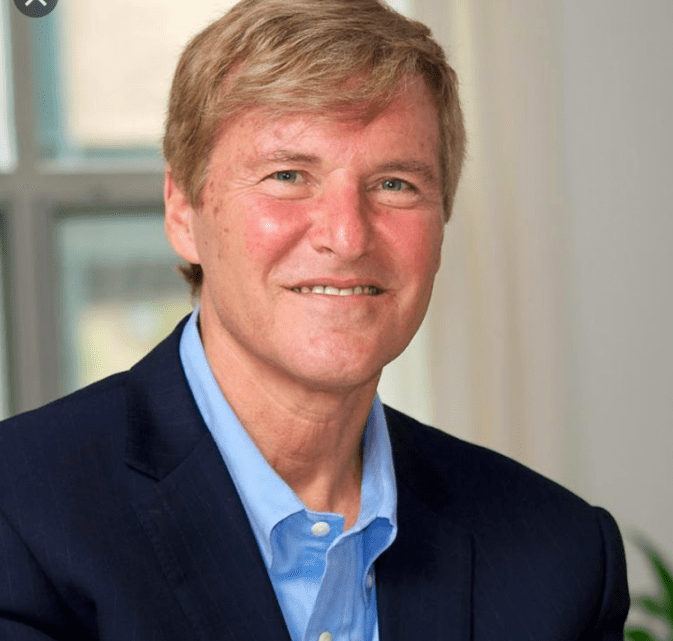
Leigh Steinberg is a premier sports agent, entrepreneur, and best-selling author. He is the CEO of Leigh Steinberg Sports and Entertainment Holdings, best known for his work building athletes into stand-alone brands.
Where did you grow up and what was your childhood like? Did you have any particular experiences/stories that shaped your adult life?
I grew up in West Los Angeles and had a childhood filled with domestic travel where our parents showed us the country, love reading, movies, the beach. My father had two core values – 1) treasure relationships, especially family, and 2) try to make a positive difference in the world and help people who could not help themselves. My grandfather managed Hillcrest Country Club. I grew up on the laps of comedians, Groucho Marx, Jack Benny, George Burns, Danny Kaye, and that fostered my love of entertainment and my father took us to see UCLA play football and basketball and Dodgers, Angels, and Rams games, and that fueled my love for sports. I was student body president of my junior high and high school which taught me the lessons of leadership.
What is something you wish you would’ve realized earlier in your life?
I don’t have the power to protect my loved ones against debilitating disease or the loss of a home because of mold. I always walk into the office expecting there will be unforeseen troubles, but I had the illusion that I could protect my father from cancer, my sons from blindness, and felt powerless.
What are bad recommendations you hear in your profession or area of expertise?
The concept of situational ethics where people bifurcate their values and are good parents, good neighbors, kind to animals, and go into the workplace and utilize heinous, social Darwin tactics in work, rationalizing the “It’s just business” and “The end justifies the methods.” That leads to disaster for society and a type of soul death for the practitioner.
Tell me about one of the darker periods you’ve experienced in life. How you came out of it and what you learned from it?
I struggled with alcohol, had eventually hit my bottom in 2010, and confronted the reality that I was an alcoholic. I worked a 12-step program with a unique fellowship and now am now in my 12th year of continuous sobriety. I learned it required resilience, patience, and an ability to see the light at the end of the tunnel.
What is one thing that you do that you feel has been the biggest contributor to your success so far?
The ability to listen and draw out another human being and go deeper and deeper below the surface until I understand their deepest anxieties and fears and greatest hopes and dreams, and how they rank their priorities in life. Putting myself into the other person’s heart and mind and seeing the world the way they see it, helps navigate your way through life gracefully.
What is your morning routine?
I wake at 8 am. I try to walk 10,000 steps in the morning. 3x a week (M, W, F) I have a morning workout. I shave, take my supplements, and head to the office.
What habit or behavior that you have pursued for a few years has most improved your life?
When the pandemic hit, the gym closed in my condo complex and I started to walk long distances and that combined with being in the fresh air and sunlight, improved my health. I also have been regularly using a hyperbaric oxygen chamber which is revitalizing.
What are your strategies for being productive and using your time most efficiently?
I put every ounce into focus into whatever task is next, attempting to be present and interactive in a way that puts every ounce of energy I have into that moment. I’m not distracted by the phone, not worrying about what I did before or what I did after — I am in that moment. And when it’s time to switch to the next task, I’ll be just as focused. It requires good assistance to keep me following a schedule.
What book(s) have influenced your life the most? Why?
- Sapiens by Yuval Noah Harari; Sapiens traces the history of mankind from its inception
and makes clear that notwithstanding technological advances our species has the same brain wiring and the emotional system as it did several hundred thousand years ago and the same flight or fight impulses. I believe psychology is the most important study of all to understand what motivates people and why they act the way they do. - Collapse by Jared Diamond; Collapse details the commonalities in why great civilizations crumbled and how to avoid the same fate.
- Black Boy by James Baldwin; I read Baldwin, Richard Wright, and Ralph Ellison as a teen and was sensitized to the negative aspects of being Black in America.
Do you have any quotes you live by or think of often?
- “The Man in the Arena” by President Theodore Roosevelt which stresses the critical nature of striving to make a difference in the world with bravery and lack of fear of failure.
- “The arc of the moral universe is long, but it bends towards justice” Martin Luther King. Social change comes slowly but this is King’s admonition to stay in the fight and see the light at the end of the tunnel.
- My father used to stress to me that when there was a problem in the world, most people think that an amorphous “they or them” (political figures, older people) will solve the problem, but you could wait forever for that to happen. The “they” who have the responsibility is you, son, you are they “they.”