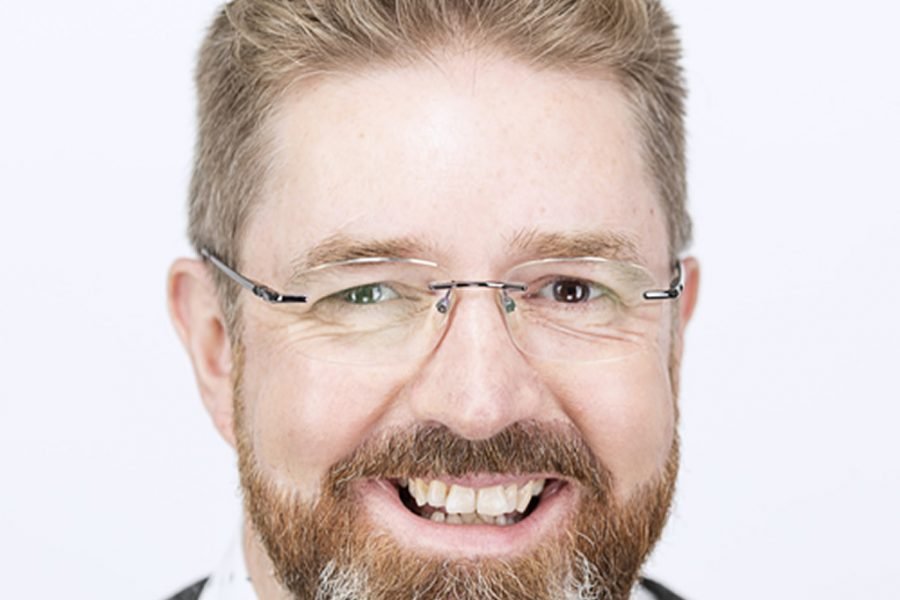
Dave Collins is a communication and collaboration consultant and remote and virtual working specialist. He is the Founder and CEO at Oak and Reeds, a professional training and coaching company that provides practical business training in effective, affordable (and fun!) formats. Collins believes that modern organizational cultures must teach and actively practice advanced communication and collaboration skills to be flexible enough to survive and thrive through any storm.
Where did you grow up and what was your childhood like? Did you have any particular experiences/stories that shaped your adult life?
I grew up outside of Boston, in Lexington, Massachusetts. I think valuing arts and theater as a kid and getting exposure to really great teachers in theater and music and chorus was really influential for me to make performance a part of my entire life. I think going to college and finding a place where I could study but also continue to perform and not have it necessarily be the focus of my degree was really important. And that’s just carried over to this career now where performance is a huge part of what I’m doing, and recognizing the value of those performance skills in the work that I do as a communication professional, I think is the critical thing from my childhood.
What is something you wish you would’ve realized earlier in your life?
Something I wish I realized earlier is that for the most important decisions in life, there’s not going to be a person who’s going to give you permission or sign-off to make that decision. Most of the big consequential decisions I’ve made have been kind of on my own if that makes sense, and there’s not a correct path that you have to take. Most of the time, you’re just gonna kind of make it up for all the interesting choices that you make anyway.
What are bad recommendations you hear in your profession or area of expertise?
I think a bad recommendation I hear a lot is in regards to dealing with change and leaders not leading by example and basically powering through the emotions of change rather than acknowledging and discussing them. For example, leaders, especially during the pandemic, not opening up about the difficulties they had adjusting to remote work or adjusting to changes in their business, and expecting the people throughout their organization to just deal with things in the same way that they dealt with them, rather than providing space for people to experience and process change at different rates and at different speeds, and be okay with the fact that some people aren’t going to do as well. Leaders oftentimes are lacking empathy in allowing their people space to have a hard time dealing with unexpected change.
Tell me about one of the darker periods you’ve experienced in life. How you came out of it and what you learned from it?
After consulting, working internally at a large tech company, I realized pretty early on that ‘that work’ was not fulfilling and I was disengaging and my performance was suffering because I wasn’t challenging myself and I wasn’t interested in the work. I caught myself going on autopilot a lot and it affected me emotionally, it affected my mood. It kind of had a negative downward spiral effect on how I was living. I realized then that I needed to start my own business, and that was the time to do it. I needed that extra challenge to keep me motivated because otherwise I could have very easily continued to sink into bad habits, both personally and professionally, because of that – lack of engagement.
What is one thing that you do that you feel has been the biggest contributor to your success so far?
Knowing my own limits and weaknesses and being really honest with myself about what I am good at and what I need help with. Along those lines, it’s creating really good habits for self-discipline to make sure that I can stay on track because I need structure and I need process and I need organization in order to feel like I’m making progress. I don’t do well in chaos, and I also need to create little rules for myself to make sure I don’t get discouraged. I think a lot of that is self-discipline and consistency in building good habits, which has been the #1 key to this success because I realized early on if I don’t get something done and if I’m not working on the things that are the highest priority, I’m just setting myself up to not be successful. Being disorganized stresses me out because I worry about forgetting things, I worry about missing stuff, and so the discipline is in creating processes and tools that I can rely on to take care of some of my weaknesses.
What is your morning routine?
I wake up at 3 am and work out for four hours (laughs). No, I wake up at 7 or 7:30, have coffee, drink a lot of water and a smoothie, and read the news. I try to create a separation between morning personal time and getting to work, even though it’s working from home. I think what’s really important is building in transition time so that I feel like when I’m in work mode, I’m in work mode, and then when I’m still in the same apartment but in personal time, I can really turn off work parts of the brain and relax even though it’s technically the same space. So I like that morning routine where I’m not immediately jumping into emails or anything so that I can create those dividing times. At the same time, I try not to–but I mean obviously, I’m human, I’ll go on the internet and get distracted–but I take a break in the middle of the day for lunch, and I’ll usually exercise then and really try to take a serious break where I put the laptop down, so I can keep my head on and basically not burn myself out.
What habit or behavior that you have pursued for a few years has most improved your life?
Honestly, I think it’s scheduling the week ahead every Friday. The planning meeting. I think that has been consistently the thing that has been the most helpful for me, both for my productivity, for my stress levels, for getting ahead of things, and also for working with an assistant, to be smart about what I can delegate. That meeting and the scope of that meeting means that I really only think about work a week ahead of time because planning too far ahead inevitably, I’m just gonna change it – again. So that weekly planning meeting where I think about the week ahead and I create time for the things I really need to get done, and I’m honest with myself about the things that probably won’t get done, so at the end of the week, I can feel good about doing what I said I would do and not feel guilty that I didn’t get a hundred things done when that was never realistic.
What are your strategies for being productive and using your time most efficiently?
There’s that Friday meeting and blocking off time to do projects, to do work, like putting it on the calendar when I have to write a workshop or prepare a proposal. Being strategic about how much time it’s gonna take and not multitasking is most helpful for me; where I am not checking my email all day long–I check it in chunks–and I’m trying to really focus on one task at a time and get it done before moving on because that’s just how my brain works. When I try to do too many things at the same time, I can’t do any of them well.
What book(s) have influenced your life the most? Why?
It’s called Everything’s An Offer by Robert Poynton. I think this book has been most impactful to me and my career in terms of starting Oak and Reeds because it clearly outlines an approach to using “Yes, And” in a business context that is clear, concise, interactive, applicable, and smart. It’s also written by an instructor and facilitator that I really admire and uses visuals really well. I think in terms of the work I’m doing now, I probably pull ideas from this book more often than any other book.
Do you have any quotes you live by or think of often?
The quote is “make it easy to work with me.” (laughs) It’s just my own personal and professional value where I want to make collaborating with me–since I’m teaching collaboration skills–I want to make the actual act of collaborating with me an enjoyable experience for clients. I found that people see that and they recognize that and want to work with me more. It also filters out clients that don’t value that in their partners, because if a client doesn’t value someone who is easy and helpful to collaborate with, then they’re probably not going to see what I bring to the table as useful, so it’s kind of a good filtering mechanism also. The other quote is another quote from myself, I guess (laughs), which is “I’m out of the prediction business.” Especially after 2020, spending time and effort making predictions is not something I spend a lot of time doing anymore because both it’s impossible to predict the future and it’s kind of a wasted effort spent worrying about something you can’t control.